How the comparison was made
4 prompts that are identical except for the part shown in brackets:
A frosted glass serum bottle with a wooden cap on a beige surface, soft daylight[, space instruction]. Refined editorial product photograph, portrait 3:4. No lettering, logos or captions.
Generated on 30 October 2026 in Google Flow with Nano Banana 2.1, portrait 3:4, one image per prompt. One run per prompt, so read the notes as observations from these images rather than rules.
The four results
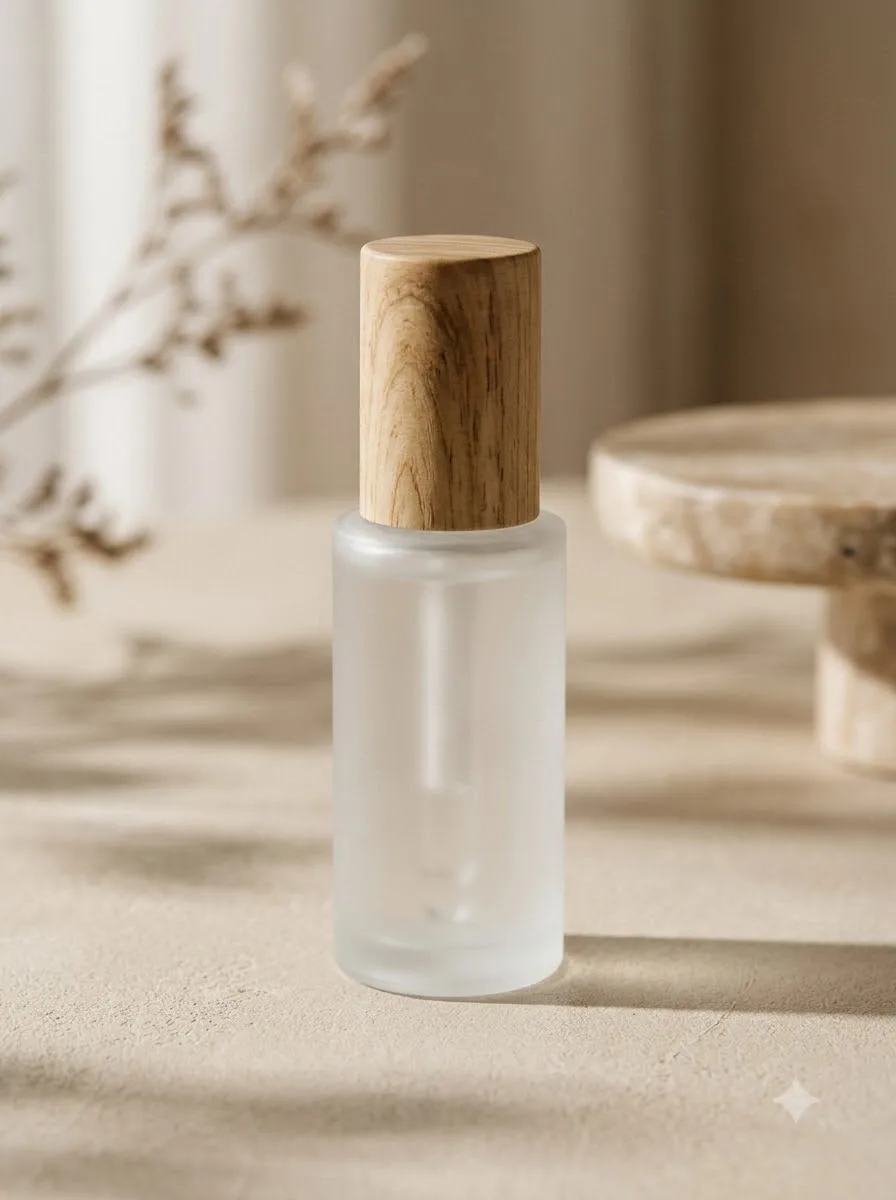
Full prompt
A frosted glass serum bottle with a wooden cap on a beige surface, soft daylight. Refined editorial product photograph, portrait 3:4. No lettering, logos or captions.
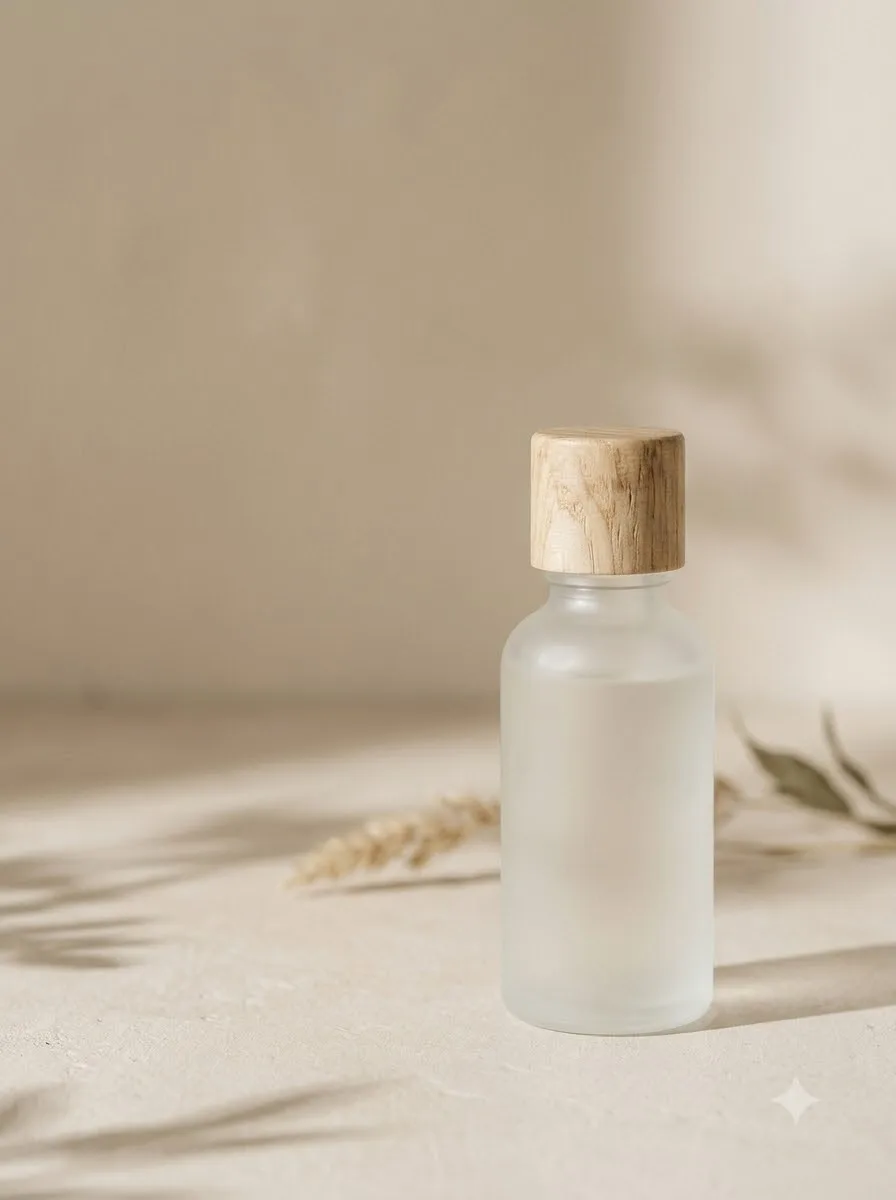
Full prompt
A frosted glass serum bottle with a wooden cap on a beige surface, soft daylight, leave empty space for text. Refined editorial product photograph, portrait 3:4. No lettering, logos or captions.
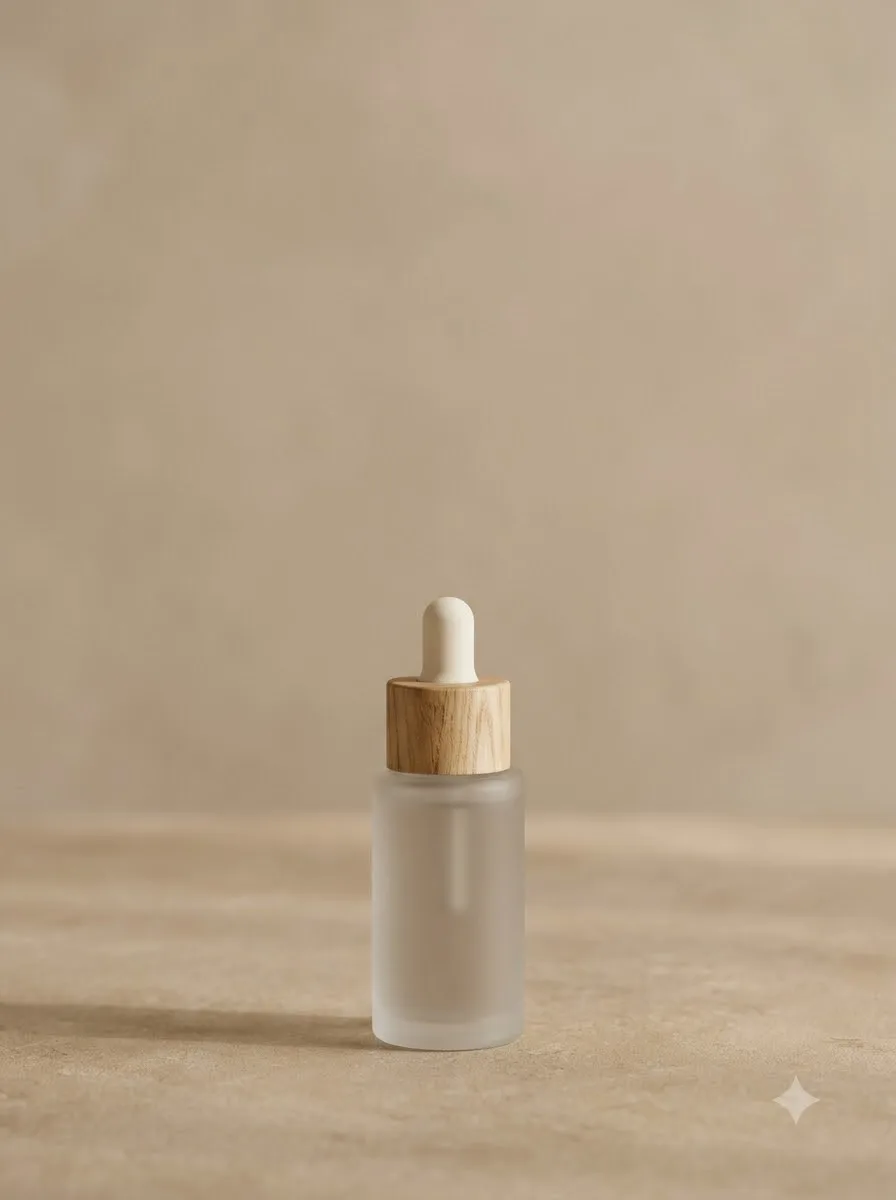
Full prompt
A frosted glass serum bottle with a wooden cap on a beige surface, soft daylight. Place the bottle in the lower third of the frame and keep the upper half as plain background. Refined editorial product photograph, portrait 3:4. No lettering, logos or captions.
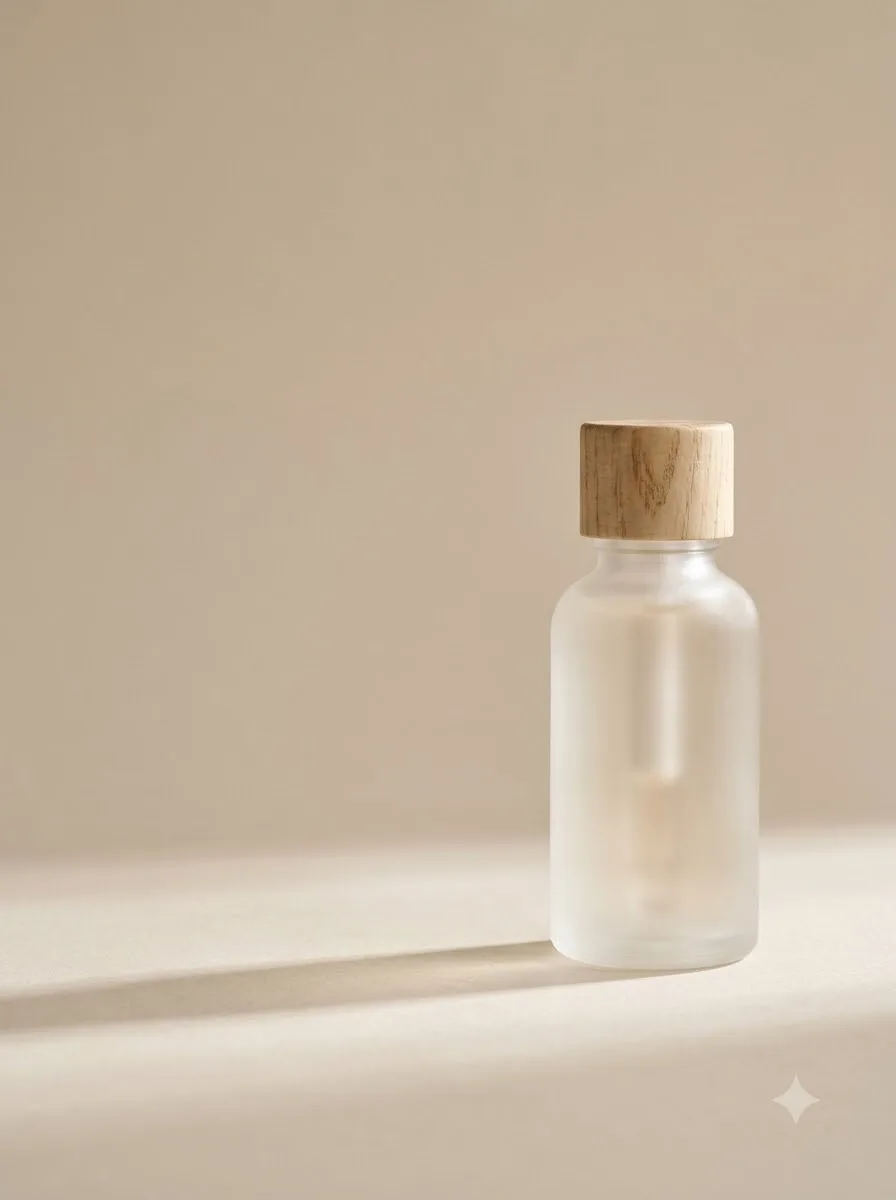
Full prompt
A frosted glass serum bottle with a wooden cap on a beige surface, soft daylight. Place the bottle near the right edge and keep the left two-thirds as plain background with no objects. Refined editorial product photograph, portrait 3:4. No lettering, logos or captions.
What changed
- Without an instruction the bottle fills much of the frame, with dried stems and a wooden riser as props. There is little room for type.
- The vague request made the bottle smaller and moved it right of centre. The upper wall is plain, but stems still reach in from the left.
- “Lower third” gave the most open space: the upper half is plain. The product changed, though — it became a dropper bottle.
- “Near the right edge” placed the bottle about three-quarters across, not at the edge, and left the left side plain with no props.
What to take from it
- A vague request for space helps a little; a positional instruction is more reliable.
- Both positional instructions also removed the extra props, which keeps the empty area clean.
- Check that the product is still the same after a layout change. Here a bottle with a cap became a dropper.
More comparisons: Guides.