How the comparison was made
3 prompts that are identical except for the part shown in brackets:
A small round-shouldered skincare jar with a flat lid, made of [material], on a pale grey stone slab, soft window light from the upper left, realistic contact shadow. Refined editorial product photograph, portrait 3:4. No lettering, logos or captions.
Generated on 25 November 2026 in Google Flow with Nano Banana 2.1, portrait 3:4, one image per prompt. One run per prompt, so read the notes as observations from these images rather than rules.
The three results
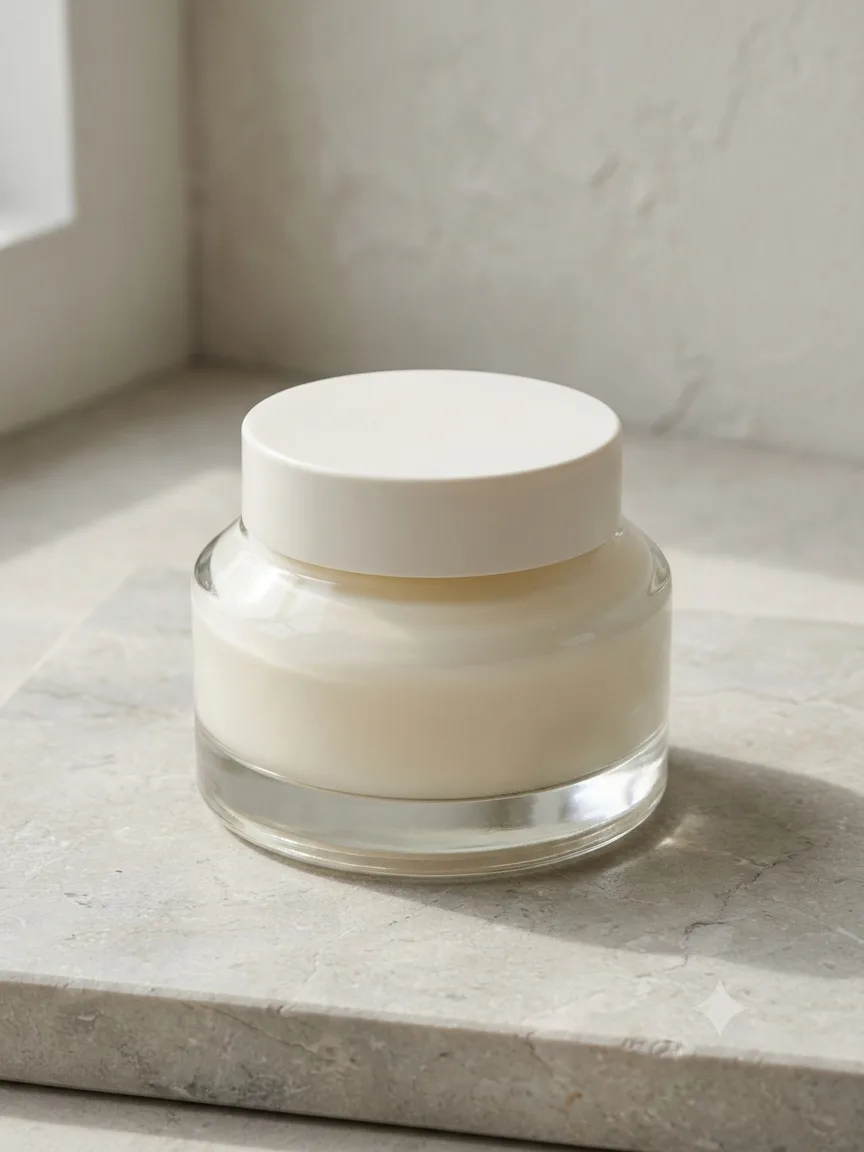
Full prompt
A small round-shouldered skincare jar with a flat lid, made of clear glass, on a pale grey stone slab, soft window light from the upper left, realistic contact shadow. Refined editorial product photograph, portrait 3:4. No lettering, logos or captions.
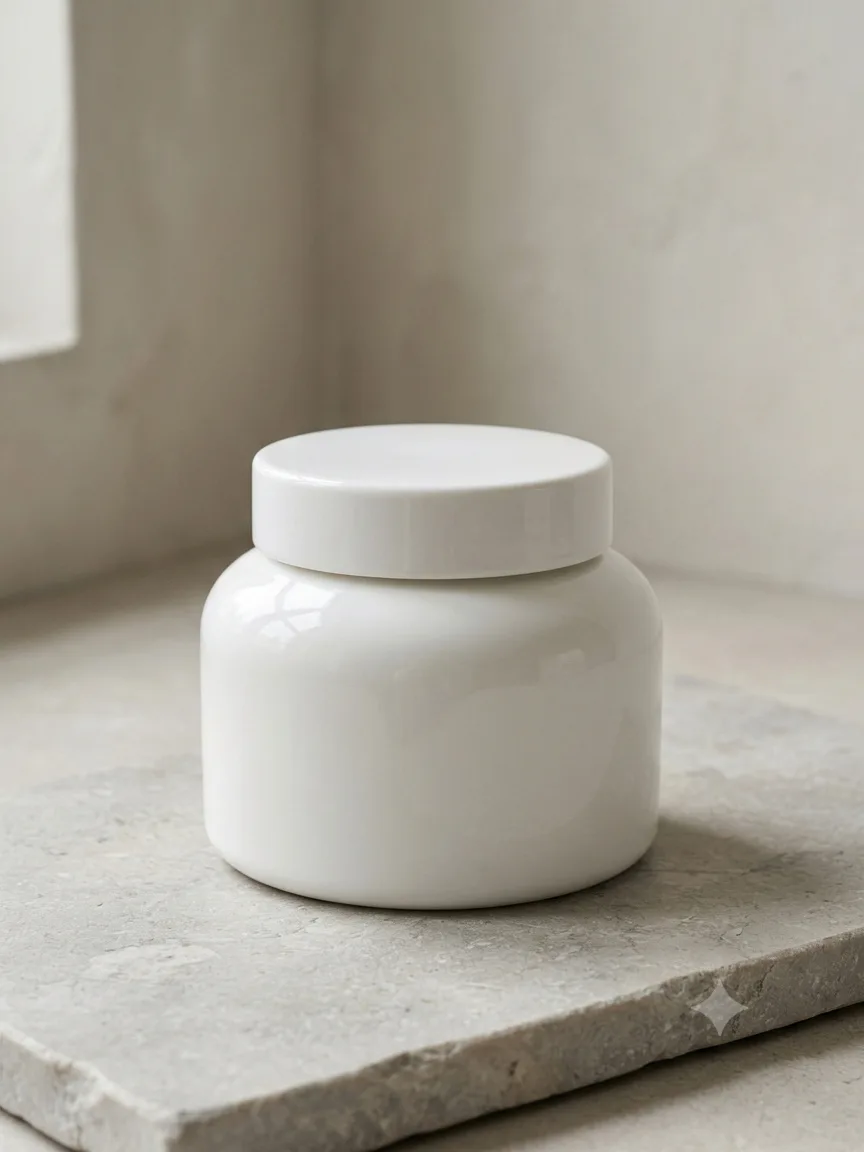
Full prompt
A small round-shouldered skincare jar with a flat lid, made of glossy white ceramic, on a pale grey stone slab, soft window light from the upper left, realistic contact shadow. Refined editorial product photograph, portrait 3:4. No lettering, logos or captions.
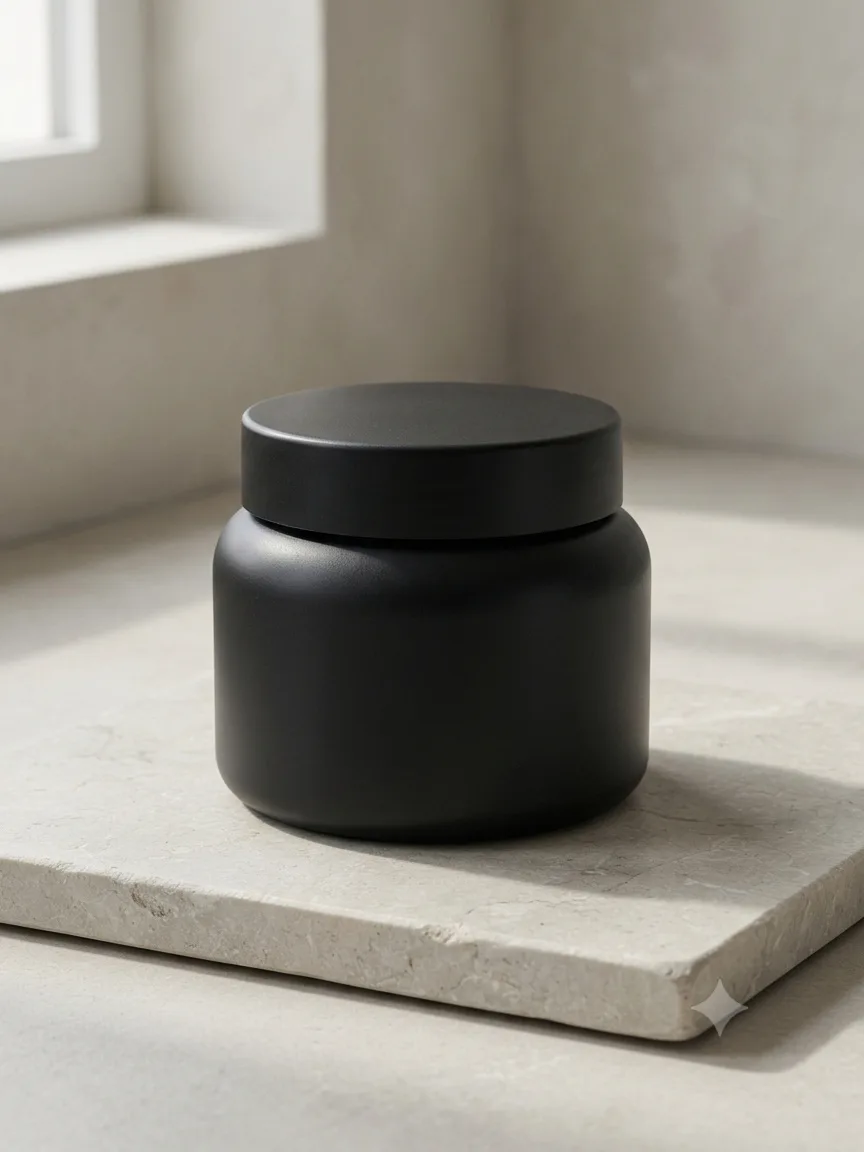
Full prompt
A small round-shouldered skincare jar with a flat lid, made of matte black plastic, on a pale grey stone slab, soft window light from the upper left, realistic contact shadow. Refined editorial product photograph, portrait 3:4. No lettering, logos or captions.
What changed
- The jar shape and size held in all three: round shoulders, flat lid, the same place on the slab. Naming the shape kept it fixed.
- “Clear glass” did not give an empty clear jar: the model filled it with white cream and kept the lid white. Only the body became glass.
- “Matte black plastic” turned both the jar and the lid black. Ceramic made both white.
- The light and the stone slab hardly changed. The black jar shows the light direction most clearly, with a bright edge on the left.
What to take from it
- Material phrases are reliable when the shape is named as well.
- Say what is inside a clear container: “empty”, or “filled with pale pink gel”.
- Name the lid separately if it must differ from the body: “clear glass jar with a brushed brass lid”.
Prompts in the library that use the same idea
More comparisons: Guides.