How the comparison was made
3 prompts that are identical except for the part shown in brackets:
A matte sage-green ceramic vase with a round body and a narrow neck, holding one dried grass stem, on a pale oak table, soft daylight from the left. [Camera angle.] Refined editorial still life photograph, portrait 3:4. No lettering, logos or captions.
Generated on 25 November 2026 in Google Flow with Nano Banana 2.1, portrait 3:4, one image per prompt. One run per prompt, so read the notes as observations from these images rather than rules.
The three results
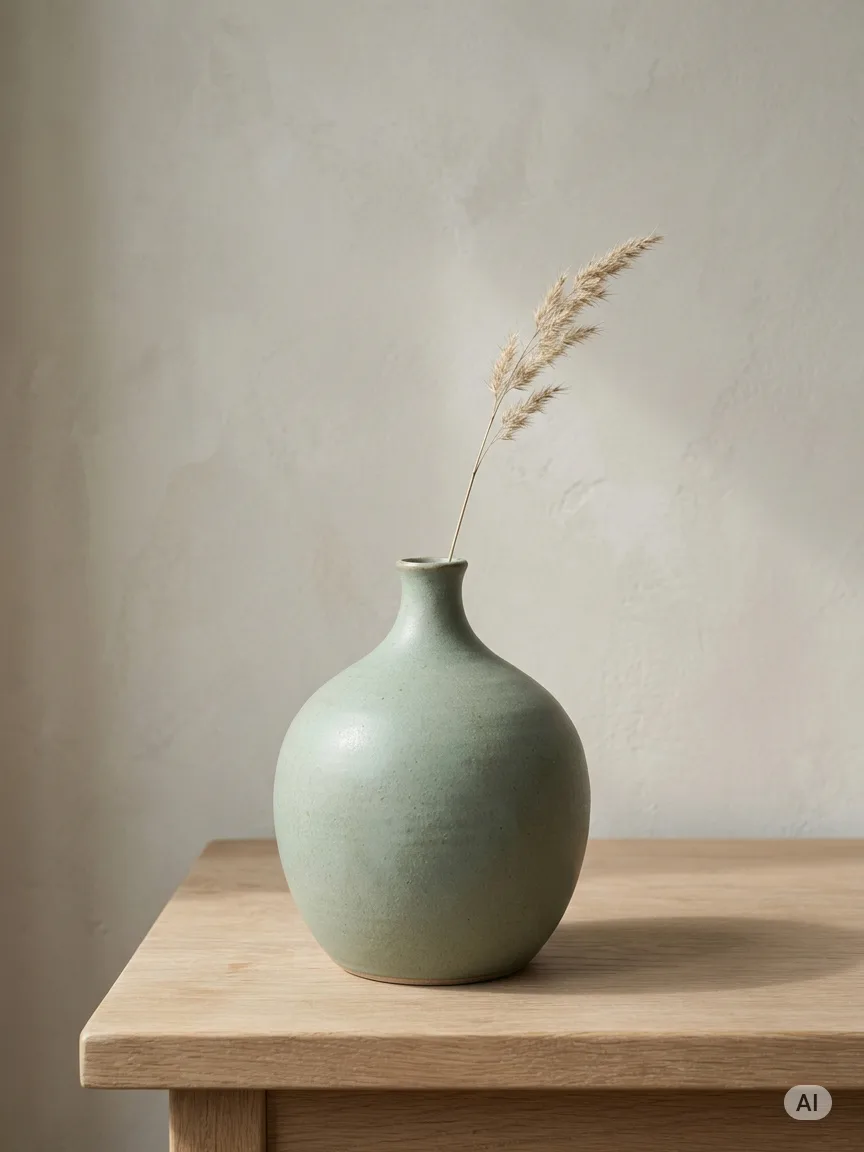
Full prompt
A matte sage-green ceramic vase with a round body and a narrow neck, holding one dried grass stem, on a pale oak table, soft daylight from the left. Camera at eye level with the vase. Refined editorial still life photograph, portrait 3:4. No lettering, logos or captions.
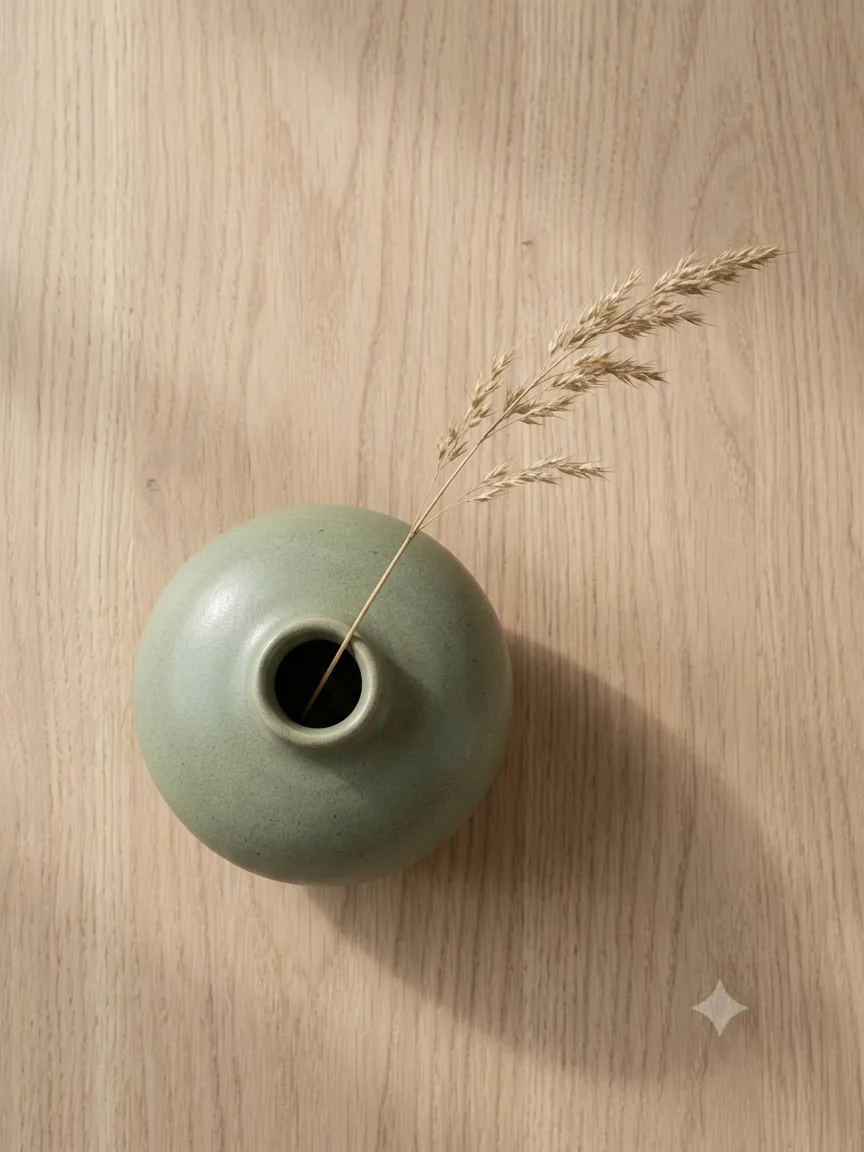
Full prompt
A matte sage-green ceramic vase with a round body and a narrow neck, holding one dried grass stem, on a pale oak table, soft daylight from the left. Camera directly overhead, looking straight down. Refined editorial still life photograph, portrait 3:4. No lettering, logos or captions.
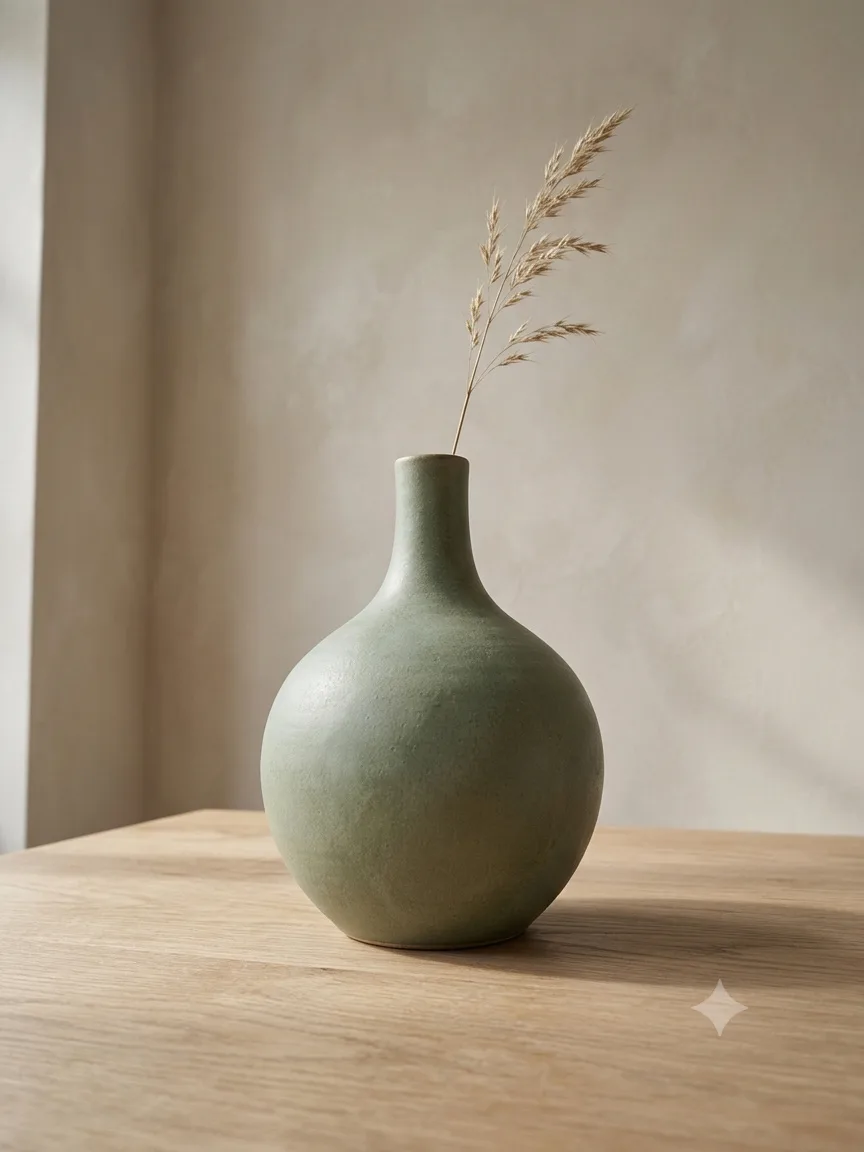
Full prompt
A matte sage-green ceramic vase with a round body and a narrow neck, holding one dried grass stem, on a pale oak table, soft daylight from the left. Low camera angle, looking up at the vase. Refined editorial still life photograph, portrait 3:4. No lettering, logos or captions.
What changed
- The overhead phrase worked literally: the vase became a circle with its opening in the middle, and the oak grain filled the whole frame. The wall disappeared.
- “Low camera angle” gave a camera just above the table top, not a dramatic view from below. The table surface is still visible.
- From the low angle the vase looks taller and its neck longer. The vase shape is the same, the perspective makes the difference.
- The light held in all three: soft daylight from the left with the shadow falling to the right.
What to take from it
- “Directly overhead, looking straight down” is a reliable flat-lay instruction.
- For a stronger low angle, say how low: “camera on the table surface, looking up”.
- An angle change also changes the background: overhead shots lose the wall, so plan the surface as the backdrop.
Prompts in the library that use the same idea
More comparisons: Guides.